Professional Liability Insurance in the London Market

Lloyd's of London
Warning: Undefined array key "file" in /chroot/home/ac397040/04a53dc833.nxcli.net/html/wp-includes/media.php on line 1788 Deprecated: preg_match(): Passing null to parameter #2 ($subject) of type string is deprecated in /chroot/home/ac397040/04a53dc833.nxcli.net/html/wp-includes/media.php on line 1788

ARTICLE

Professional Liability Insurance in the London Market

Lloyd's of London

WHY THE LONDON MARKET MAY FIT YOUR FIRM’S PROFESSIONAL LIABILITY INSURANCE NEEDS

Professional liability (PL) insurance options for most U.S.-based architects and engineers primarily originate from two locations: the London insurance market and the U.S. domestic market. The two markets share certain characteristics, including common companies and people, but they also differ in several key ways.

The London and U.S. insurance markets have separate cycles. Right now, the London market is on more of an upswing than the U.S. domestic market due to the exit of several PL insurers in the U.S. over the past few years, and significant rate and appetite changes. For some firms, this may provide an opportunity to look to London for PL insurance. Assessing London market options, however, requires an understanding of the distinct characteristics of a London placement.

U.S. vs. London Market: What’s the Difference?

The fundamental differences between PL insurance from the U.S. when compared to London revolve around process and structure.

U.S. domestic underwriters work for companies based in many different cities (e.g., New York, Chicago, Hartford, Minneapolis, and Philadelphia are common headquarters for U.S. PL insurers). The underwriters themselves may work in a satellite office or remotely, which has become more typical after the pandemic. With these individuals spread throughout the county, the ability to see several underwriters to build relationships and assess options through an insurance renewal cycle can be challenging and usually involves a number of people traveling or calling into virtual meetings.

In London, there is an actual insurance market centered around the Lloyd’s of London building, with its cavernous stock exchange-like trading floor, and surrounding office buildings teeming with underwriters, brokers, regulators, and other insurance professionals. The aggregation of underwriters in the London market is partially due to the sheer volume of insurance business transacted out of London, which is where insurance first began as a business in the mid-1600s and where many global insurers remain based.

While there are also many U.S. insurance companies and offices, they interact and work together far less often than in London, where everyone is working in a tightknit market environment. In the space of a day over a series of meetings within walking distance, a firm can meet dozens of underwriters providing U.S. PL options.
London underwriters value in-person meetings to better understand the risk of a particular firm. While virtual meetings are acceptable, many firms find value in sending firm leaders to London for a few days to meet with underwriters. This process is distinct compared with what is more common in the U.S., and this relational approach fostered by geographic proximity is a key component of the London market.

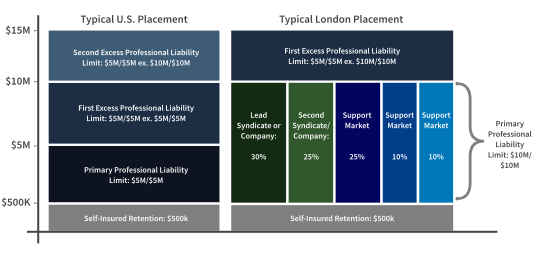
The different market conditions in the U.S. lend themselves to different insurance placement structures. In the United States, PL insurance is typically placed with a single insurance company for an individual policy. If a firm buys higher limits or needs to increase its coverage in the U.S. market, it will likely purchase more coverage in layers from another underwriter in a separate policy with a different insurer.

These layered U.S. programs often have one insurer per layer and would rarely have more than two carriers sharing coverage equally. Insurer exits from the marketplace have an uprooting impact on their clients, who then must seek out full replacement for a layer. To address this, savvy brokers try to place excess layers with underwriters who are more likely able to “drop down” to primary in the future.

In London, most individual policies have multiple insurers on one placement — a structure known as syndication (the insurers who are formally under the Lloyd’s of London corporate umbrella are called syndicates). Coverage is divided vertically among the syndicates, and every company pays a set percentage of every claim after receiving the same percentage of the premium. A single policy is typically comprised of three to five participants.

Insurers enter and exit the London marketplace similarly to those in the United States, but there is one major distinction: With the syndicated approach to PL insurance, firms are not shouldered with the burden of replacing an entire policy, of say $10 million in coverage, if a carrier exits or they have a mega claim; they may only need to replace one syndicate’s share of 10% to 25%. This enables policy language and coverage rules to stay the same, and the firm experiences little to no disruption in their coverage year-to-year.

U.S. vs. London Placement
Should My Firm’s Professional Liability Insurance Be Placed in London?

Some firms mistakenly conclude that if their firm does not have an international presence, the London market would not provide a viable option for their PL insurance. Others believe that the cost of PL insurance from U.S. insurance companies is always lower than London. These beliefs are not always true. The London market routinely offers attractive and competitive PL solutions even for firms that operate solely within the United States.

That said, firms that buy PL insurance in the London market typically have certain traits. Firms benefiting most from the London market usually have some, or all, of the following characteristics:

  • Firms that want more control over PL coverage terms, claims handling decisions (including selection of outside counsel), and that desire close personal relationships with insurers
  • Firms with an unfavorable claims history, either due to one substantial claim or a series of claims, resulting in fewer U.S. insurers offering competitive terms
  • Firms that have had a poor claims handling experience in the U.S. and prefer the London market’s syndicated approach to underwriting and claims (including the use of U.S. monitoring counsel for claims adjustment)    
  • Large firms with international operations and exposures – these companies often have hefty, self-insured retentions and require higher coverage limits that are more commonly found in the London market and have international contracts with insurance coverage requirements that cannot be met with U.S. domestic insurers, particularly those constrained by filed and admitted insurance forms approved by state regulators
  • Firms with high PL insurance costs driven by riskier project types, professional services disciplines, and project locations 
There are some firms, though, that may not be a good fit for the London market, including:
 
  • Cost-conscious firms whose primary concern is price or their deductible, as self-insured retention amounts are often higher in the London market on a percentage basis and premiums can be, but are not necessarily, higher in London
  • Environmental firms and other certain classes of businesses that are not as attractive to London underwriters due to a history of claims disproportionately impacting the London market
  • Firms that want to take a hands-off approach to managing claims. In the United States, it is common for a firm, particularly smaller ones, to have a relatively low deductible where the insurer primarily assumes responsibility for handling a claim. Because the London market has higher self-insured retention amounts, firms are far more involved in the claims process, and rely more on their coverage to backstop larger, catastrophic claims.

What Are the Benefits of London-Based Professional Liability Insurance?

In addition to the different process and structure that often comes with a London market placement, firms enjoy several more benefits:

1. Customizable Coverage

London underwriters specializing in U.S. PL focus on U.S. exposures and legal environment, so they are skilled at tailoring policy language to a firm’s individual needs. The London market offers access to surplus lines policies that are not admitted in the United States, which means that the insurers have not filed policy language with state regulators for approval.

While surplus lines placements do not benefit from state insurance schemes to protect policyholders from nonpayment of claims or insurer bankruptcy, they do allow for customized policy wording. This flexibility to meet a firm’s coverage requests usually outweighs the risk of not having a state-backed insurance fund — particularly for Lloyd’s syndicates who have significant insurer capital requirements, reserves, and a centralized emergency fund supporting insurer obligations.

For international firms or U.S.-based firms that are constrained by their domestic insurer’s filed policy form and standardized language or exclusions, a London surplus lines placement allow organizations to customize the coverage language to meet their needs. (Note: there are U.S. domestic insurers who place business on a surplus lines basis and can also offer highly customized policy language.)

2. An International Solution

The London market is a good fit for firms with international operations. Because of the different laws, customs, legal conditions, and historic insurance requirements that apply to projects outside the U.S., insurance looks and works differently in many foreign jurisdictions. London-based insurance can be particularly helpful with these international exposures and contracts.

In the United States, for example, PL policies include a per claim limit and an aggregate limit, which is the maximum allowable amount for reimbursed losses within a specified period, typically one year. In other parts of the world, such as the United Kingdom and the Middle East, there is an expectation for the limit on a PL insurance policy to apply to every claim during the policy period, without an overall policy maximum or aggregate. Contracts for projects in these locations will commonly stipulate that no PL aggregate limit is allowed, which could cost a firm the job if the applicable coverage is a U.S. based policy with a policy aggregate.

Other typical international coverage needs include coverage for civil code and strict liability, statutory inherent defects, decennial liability, indemnity to principal, and collateral warranties. London underwriters are very familiar with these requirements and can create policy language to meet them.
The right policy language can be the difference between the firm that wins or loses a project opportunity.

3. Claims Handling

With multiple insurance companies involved in a single PL policy in the London market, the claims handling process is different than a U.S. PL policy utilizing in-house claims adjustors. London markets routinely appoint a U.S.-based attorney as “monitoring counsel” on London placements, and this approach is a major differentiating factor between the markets.

With London policies, the policyholder reports the claim to the assigned monitoring attorney, who collects all relevant information, assists with strategy, monitors the claim, and provides claim status updates to the London underwriters and claims teams. These attorneys are very practical and experienced and have a wealth of knowledge and expertise to facilitate seamless claims processes. They also have flexibility to approve outside defense counsel and rates rather than having to stick to a limited list of pre-approved monitoring counsel with sometimes below market rates.

No matter how many syndicates are on a policy, no more than two lead the strategy but all pay the claim. With standard claims (under £250,000), the stipulated lead syndicate makes all the decisions, and the other participating syndicates follow suit. For complex claims (over £250,000), the lead and a second stipulated company make the decisions together, and everyone else follows behind them.

The London Market Requires an Experienced Broker

While there are many great U.S. insurance companies with experienced and stable PL underwriters, the London market cannot be disregarded as an option for many U.S. architects and engineers. Firms considering the London alternative just need to understand the differences in process and structure associated with a London placement. They also need to work with a knowledgeable and experienced specialist broker.

  • There are a lot of upsides to the London market, but it is not for every firm.
  • Are you interested in more creative and flexible coverage options?
  • Do you have concerns about how your firm’s claims have been handled in the past?
  • Are you unhappy with your current insurer?
  • Do you need a new, more effective solution to manage international exposures?
  • Would you like to have more stability and longevity with your insurer?
  • Do you want higher limits, or a different combination of limits, self-insured retention, and premium?
  • Are you curious to make sure your firm has assessed the full range of PL insurance options?
If you answered yes to any of these questions, it’s worth exploring whether the London market is better suited for your firm’s PL insurance needs.

Greyling Insurance Brokerage & Risk Consulting, a division of EPIC, is a specialty insurance brokerage and risk consultant focused on design and construction professionals. Our expert professionals are here to help you navigate your insurance and risk needs by securing the most optimal solutions for your business — even if that means going across the world to find them.


AUTHOR

Kent_Collier

KENT W. COLLIER, JD

MANAGING PRINCIPAL

Kent provides day-to-day service to Greyling clients regarding insurance and risk issues in the architecture, engineering, construction, environmental, and legal service fields. He brokers practice and project specific insurance placements for A/E, construction, and law firms across the country. Drawing on years of experience as a construction attorney, Kent is heavily involved in his clients’ recognition, reporting, and resolution of insured claims.

Kent performs risk management consulting for clients including preparation and presentation of educational seminars, compilation and analysis of risk surveys, drafting and negotiating professional services contracts, and answering various client questions concerning legal, insurance, and risk issues impacting the construction and engineering industry. He has experience presenting continuing education training to staff regarding risk management, contracts, and insurance topics.


Safeguarding Your Business During Holiday Celebrations

Hosting holiday parties with alcohol

RISK BULLETIN

Safeguarding Your Business During Holiday Celebrations

Hosting holiday parties with alcohol

It’s the night of the company holiday party. A couple enjoys their evening with colleagues and friends. After some time, they say their goodbyes and leave in the company car — intoxicated and not wearing seatbelts. Within moments of their trip home, they’re involved in a car accident. Both are pronounced dead at the scene.
Not everything can be merry and bright during company holiday events. Amid party planning, it can be easy to forget about the level of risk and potential liabilities you’re creating for the business, employees, and their families.

With 64.4% of companies holding in-person holiday parties1, it’s clear that now more than ever companies need to address these potential liabilities or risk litigation. As a place to start, ask yourself:

  1. What type of party are we having?
  2. Where are we having the party? Does it change our typical exposure?
  3. Who’s invited? Spouses? Family?
  4. Will the time of day we have the party encourage unruly behavior?

With these questions top of mind, you can better understand your exposure level before you host. And to help keep your holiday party going like it’s 1999, we’ll break down two ways to approach your liability.

Unwrapping Holiday Party Liability

Guests, food, secret Santa gifts, holiday music, transportation—there’s a lot to consider for the company festivities. Here’s how you need to think about holiday party liabilities:

Insurance Factors

Whether you’re renting a space, hosting a holiday get-together in your office, or hiring a company to host and serve libations, two main coverages should be considered for holiday events: Host Liquor Liability (HLL) coverage and Event Insurance.

Because no one office Christmas party is the same, here’s how these coverages may be applied in different scenarios:

1.   Host Liquor Liability

Christmas cheer versus Christmas cheers! Holiday drinking is a main concern for event spaces, and HLL coverage is generally always asked for upfront. If you are renting a space that’s providing liquor or hosting a party with a liquor vendor that serves alcohol, do the following:

  • Require HLL coverage in the vendor’s contract with your company included as an additional insured (AI)
  • Confirm HLL coverage by requesting a Certificate of Insurance (COI)

Revisit your General Liability (GL) policy to verify HLL coverage if you are hosting the Christmas party and plan to provide the alcohol to serve to attendees. The 04/13 edition of the Standard ISO GL policy has a carve-back in the Liquor Liability exclusion, which is where coverage can be found (see Coverage Form below).

COMMERCIAL GENERAL LIABILITY COVERAGE FORM

SECTION I – COVERAGES
COVERAGE A – BODILY INJURY AND PROPERTY
DAMAGE LIABILITY

2. Exclusions
c. Liquor Liability

“Bodily injury” or “property damage” for which any insured may be held liable by reason of:

(1) Causing or contributing to the intoxication of any person;
(2) The furnishing of alcoholic beverages to a person under the legal drinking age or under the influence of alcohol; or
(3) Any statute, ordinance or regulation relating to the sale, gift, distribution or use of alcoholic beverages.

This exclusion applies even if the claims against any insured allege negligence or other wrongdoing in:

(a) The supervision, hiring, employment, training or monitoring of others by that insured; or
(b) Providing or failing to provide transportation with respect to any person that may be under the influence of alcohol;

if the “occurrence” which caused the “bodily injury” or “property damage”, involved that which is described in Paragraph (1), (2) or (3) above.

However, this exclusion applies only if you are in the business of manufacturing, distributing, selling, serving or furnishing alcoholic beverages. For the purposes of this exclusion, permitting a person to bring alcoholic beverages on your premises, for consumption on your premises, whether or not a fee is charged or a license is required for such activity, is not by itself considered the business of selling, serving or furnishing alcoholic beverages.

2.   Event Insurance

For company parties, it’s not uncommon to visit a local park or outdoor space. Unfortunately, municipalities may not consider HLL coverage sufficient. Event Insurance can take the “bah humbug” out of your holiday party by incorporating HLL into a General Liability policy.

Typically found online, Event Insurance typically covers one event and is budget-friendly. A word of advice? To ensure active coverage, don’t wait until the last minute to purchase. Just like your last-minute holiday shopping, it never ends well.

For the elves making your holiday party merry and bright, you can require them to carry Event Insurance if they are too small to have their own Business Owners policy with General Liability coverage.

Risk Management Practices

As we approach the most wonderful time of the year (for your employees), there are some practical measures you can take as a business to keep risk managed and folks happy. In the midst of the company gift exchange, you can implement a few practices company-wide to ensure a safe, risk-free event.

  • Arrange transportation for the entire party, or a designated driver to take team members safely to and from the event space.
  • Create rules for attendees to practice, like the number of drinks allowed per person (drink tickets are a fun way to engage people).
  • Have a plan for emergencies that highlights where folks can evacuate or go in the event of a medical emergency.

It is also important to consider next year’s holiday party. Having resources available to employees to provide feedback about the holiday party can better inform strategies and planning for future events. With these practices in mind and coverages addressed, your company is left to enjoy the holiday season.

AUTHOR

Kristen Walker

KRISTEN WALKER, CRIS, LEED

SENIOR VICE PRESIDENT

Kristen is a client executive and broker with Greyling, a division of EPIC. She is experienced in the unique coverage needs of both contractors and design firms. She works with mid-sized to large clients, many with global exposure and complex insurance programs.

Kristen founded the Greyling | EPIC sponsored Women in A/E/C Networking Events that provides a forum for relevant industry topics to be discussed by leading and up-and-coming women in a relaxed environment.

Kristen joined Greyling in 2012. Prior to that, she was a Senior Underwriter at Zurich focusing on both project and practice professional liability policies for owners, contractors, and designers. Kristen holds Construction Risk and Insurance Specialist (CRIS) and Leadership in Energy and Environmental (LEED) Green Associate designations.

3 Common Contract Pitfalls & How to Avoid Them

Contract Pitfalls
REPORT

3 Common Contract Pitfalls & How to Avoid Them

Contract Pitfalls

In the construction industry, design services and consulting involves significant risks. Many projects are governed by lengthy and complex contracts, and legal terms often exacerbate risks.

Signing a contract without a formal, professional review exposes a design firm to inappropriate risks, making the firm vulnerable to uninsured losses. The only safeguard is a sound, rational, and business-minded professional review and negotiation of every contract. This proactively protects your firm should a claim arise, as an insurance carrier could deny a claim if a contract contains terms that jeopardize an A/E firm’s liability coverage.

A well-structured contract can serve as an essential risk management tool for the firm and provide a key foundation for a successful project. Doing your due diligence ensures fair contractual conditions that are in both parties’ best interests and further prevents an A/E firm from committing to onerous contractual terms exceeding industry standards.

3 Common Pitfalls to Avoid in Your Contracts

Contracts must be insurable to avoid claim processing delays or denials. Consider these three common contractual pitfalls:

1.   Overpromising

Architects, engineers, and consulting professionals are legally expected to follow a professional standard of care. Issues easily arise when a contract does not include the appropriate standard.

Did you know that you can contractually heighten the standard of care you agree to comply with? Seemingly harmless phrases in a contract can create a contractual obligation that design professionals would otherwise not be obligated to meet. Examples include:

  • Guaranteeing that your work will be “free from defect”
  • Warranting your services will result in a project “fit for its intended purpose”
  • Stating the services will meet a specific deadline without delays.

Elevating the standard of care could jeopardize or even negate your professional liability insurance coverage. The cost of defending a claim or lawsuit could then fall on your firm – without the benefit of insurance coverage — thereby impacting profitability or putting you and your firm at risk of a major financial loss.

Take Action: Watch out for language in a contract that is inconsistent with the common law standard of care and that demands performance beyond the baseline. Avoid phrasing such as “highest,” “world-class,” or wording that implies a design will meet every requirement or intention of the project owner. Be aware that even marketing materials may overpromise. Seek out customized contract reviews to this type of uninsurable contractual liability.

2.   Agreeing to an Immediate Duty to Defend

Another common contractual liability to avoid is the “duty to defend” in indemnification clauses. This obligates a firm to defend another party immediately upon notice or tender of a claim, regardless of who may be at fault.

The word “defend” raises significant insurability issues — regardless of the insurance company involved — because it is broader than the duty to indemnify. An A/E firm may be required to defend a claim based upon a mere allegation of negligence, whereas a duty to indemnify is triggered by a finding or agreement of actual negligence.

The high costs of defending a claim may not be insurable until a final determination of fault, leaving your firm paying out of company coffers, possibly for years. Professional liability coverage is triggered by negligence in the performance of your services, so avoid agreeing to this defense obligation in your contracts.

Take Action: Avoid agreeing to “defend” in an indemnity clause because a contractor-oriented contract is proposed or because other parties and their lawyers are focused on Commercial General Liability coverage and not Professional Liability.

3.   Proportionate Causation of Negligence

Indemnification is a contractual obligation that deals with tort liability. It is one party agreeing to be responsible for a lawsuit or damages directed against the other party.

Indemnity clauses in contracts often include many things that can “trigger” an obligation to indemnify. For an A/E firm to have an indemnity obligation that is insurable under its professional liability policy, such triggers need to be restricted or tied back to a finding of the firm’s proportionate negligence.

Including a wide range of damages and losses potentially arising from the project — such as, “any and all claims whatsoever” — under an indemnity provision might seem like covering all bases. However, the broader an indemnification agreement is, the less coverage you may have in the event of a claim.

Take Action: Include the phrase “to the extent caused by” in your indemnity clause. Avoid broader, open-ended phrases like “arising out of or related to,” which are more common in construction contracts rather than professional services agreements. If the indemnity terms go beyond this, you put yourself at risk for uncovered losses or damages as AE firms are only covered for your own specific liability to the extent damages are caused by negligence.

Being Proactive Reduces Risk

Contract review and negotiation are essential steps in managing your firm’s inherent risk. Putting in the time and effort to thoroughly review contracts and amend the language to better protect your firm can prevent costly claims and avoid uninsurable liability. Be proactive and make sure your contracts contain fair mitigation of risk, rather than waiting until a claim arises and facing potentially uninsured damages after the fact.

AUTHOR

Kelly_Jackson 2

KELLY LONG JACKSON

SENIOR CLIENT ADVISOR | CONTRACTS & CLAIMS

Kelly Jackson is Contracts & Risk Analyst with Greyling Insurance Brokerage. She supports Greyling clients through review and comment on professional services and construction contracts with respect to insurance requirements, insurability of key provisions, and other major enterprise risk issues. Kelly also assists with identification, reporting, management, and closure of claims activities on all lines of insurance coverage. She is a licensed insurance broker in Georgia.

Prior to joining Greyling, Kelly was a corporate paralegal for ten years at URS Corporation. At URS, she was responsible for a variety of corporate legal management tasks worldwide including contract review and preparation, litigation management, licensing, corporate compliance, and the Anti-Corruption and Bribery program. Between URS and Greyling, Kelly spent four years in Africa as a procurement officer in a privately held construction company.

Bridging the Cybersecurity Gap: Personal Cyber Coverage for Executives

Personal cyber protection for executives
REPORT

Bridging the Cybersecurity Gap: Personal Cyber Coverage for Executives

Personal cyber protection for executives

In today’s interconnected world, the distinction between personal and professional spheres is diminishing, particularly for executives at large firms. Historically, these individuals were leveraged as conduits for corporate fraud. For instance, in early 2024 a deceptive video call led an Arup employee in Hong Kong to transfer HK$200M (US$25.6M) to fraudulent accounts, duped by AI-generated images of company leaders.

Now, we are seeing a growing trend that those same high-profile executives are direct targets for cyberattacks.  Their visibility on corporate platforms and public records increases their susceptibility to digital threats. In a study on IT decision-makers and C-level executives, 64% of respondents believed that those in senior management positions are the most likely to be targeted by malicious cyberattacks within their organizations.

This vulnerability extends beyond corporate interests, affecting the personal lives of high-profile individuals and their families through increased incidents of credit card fraud and identity theft, often with multiple unauthorized bank accounts and credit cards opened in their names. Unfortunately, most corporate cyber insurance policies fall short in protecting the personal digital footprint of these high-profile individuals.

The Blurred Lines of Cyber Risks

Executives often find their personal information is as much a target as their professional data. Cybercriminals exploit the visibility of executives’ personal details for malicious purposes, leading to a complex interplay between personal and commercial cyber risks. The distinction between the two is becoming increasingly obscure, as attacks can originate from either sphere and impact both.

The Shortcomings of Corporate Cyber Insurance

While corporate cyber insurance is a staple in the risk management portfolio of any modern business, it typically does not extend to the personal cyber risks faced by executives and their families. These policies are designed to protect the corporate entity, its operations, and its data, leaving a significant coverage gap when executives suffer personal cyberattacks.

The Need for Personal Cyber Insurance

To address this gap, personal cyber insurance is the obvious solution. It offers personal protection against the financial repercussions of cybercrimes such as identity theft, online fraud, and cyber extortion that are not typically covered by corporate policies. Personal cyber insurance can provide coverage for expenses related to restoring one’s identity, legal fees, data recovery, and even ransom payments in the event of cyber extortion.  Additionally, some plans offer monitoring on social media, email, and the dark web as well as internet and router security across all devices to prevent exposure.

Evolving Solutions in Executive Cyber Protection

In response to this rising risk, the insurance industry is adapting with innovative solutions. A growing trend among forward-thinking companies is the adoption of personal cyber coverage as part of their executive protection strategy. These policies are standalone coverages that address the specific vulnerabilities of executives’ personal digital lives.

Insurance providers are now offering packages designed for high-profile persons with varying limits, ensuring that there is a solution suitable for every level of exposure. This proactive approach by companies underscores the recognition of the critical need to safeguard their leadership beyond the workplace. By investing in personal cyber coverage for their executives, firms are not only protecting their most valuable assets but also setting a new standard in executive risk management.

Greyling has developed partnerships with leading providers to deliver an innovative personal cyber insurance offering that provides a comprehensive suite of services designed to enhance digital security for executives and their families. With a focus on prevention, protection, and assistance, the service includes home network security, continuous monitoring, 24/7 support, comprehensive insurance with coverage up to $5M, and educational resources to empower users. 

AUTHOR

Gregg_Bundschuh (1)

GREGG BUNDSCHUH, JD

CO-FOUNDER & MANAGING PRINCIPAL

Gregg Bundschuh is a co-founder and an equity partner of Greyling Insurance Brokerage. He is nationally recognized for his active role in addressing emerging issues that affect the construction, design, and development communities. He advises clients of the firm on their insurance programs and risk management strategies. He also provides guidance to industry organizations such as the Associated General Contractors of America (AGC), the American Institute of Architects (AIA), the American Council of Engineering Companies (ACEC), and the National Council of Architectural Registration Boards (NCARB). Gregg’s unique perspective on risk and insurance issues reflects his background as a construction lawyer, a general counsel to an international design firm, and an insurance broker and risk consultant.

Gregg’s experience includes design of customized insurance policies for risks associated with building information modeling (BIM) and integrated project delivery (IPD). He has developed insurance and risk management programs for domestic and international firms in a wide range of industries. In addition, he has spoken before dozens of national and international gatherings concerned with design, construction, risk management, and insurance matters. His publications include An Owners’ Guide to Construction Risk Management & Insurance; the insurance chapter of the New York Construction Law Manual; and The Design/Build Deskbook.

Supply Bonds

Supply chain protection

ARTICLE

Supply Bonds

Supply chain protection

The Crucial Role of Supply Bonds in High-Stakes Projects

When you’re in an industry at the epicenter of innovation and building, every detail counts, and time is of the essence. Unfortunately, supply chain turbulence has infused challenges into the process of design and construction. The pandemic brought on many of these challenges, but attacks on maritime vessels in the Red Sea and droughts in the Panama Canal region have been problematic as of late, causing shipping costs to skyrocket by over fourfold since late 2023.

Picture this scenario: A reputable design-build firm that specializes in crafting highly specialized buildings in the pharmaceutical and food and beverage space is tasked with creating a facility vital for vaccine operations. Because of this, the firm needs to procure very specific and costly equipment. But what if the designated distributor or manufacturer fails to deliver crucial materials and equipment on time? Faced with this looming uncertainty, the firm’s leaders seek answers. Is there a safety net, an insurance or a risk transfer mechanism capable of mitigating the pitfalls of supply chain disruptions?

Luckily, there is an answer: supply bonds.

Supply Bonds Protect Against Supplier Default

In the intricate terrain of procurement, firms concerned about supplier default should seek a carefully crafted contract backed by a supply bond. Unlike traditional insurance products, supply bonds are rooted in banking relationships, serving as a vital mechanism to ensure the smooth flow of materials and goods essential for project completion.

In essence, a supply bond provides assurance to the purchaser that they will either receive the contracted goods within the time and quality constraints specified or be financially compensated if the delivery falls short.

As one of several types of contract bonds designed to guarantee the fulfillment of supplier obligations, supply bonds come into play primarily in large-scale projects with extensive material requirements or high volumes of specialized components. Should a supplier falter in delivering the agreed-upon materials for any reason, the purchaser, typically represented by the project manager or owner, retains the right to file a claim. This breach of contract triggers the surety company’s obligation to compensate the obligee, covering the losses or setbacks incurred as a result of the supplier’s default.

However, the efficacy of supply bonds hinges not only on their existence but also on the meticulous crafting of contractual terms that address potential delay issues. A well-drafted contract should shield the business from accountability in the face of delays beyond their reasonable control, including acts of God or unforeseeable supply chain disruptions.

Even if specific references to supply chain delays prove impracticable in the final contract, certain key points should be communicated and documented. These include:

  • Acknowledgment by the owner of the inherent risk of delays in equipment delivery due to supply chain and other uncontrollable factors
  • Understanding that estimated delivery times and material costs serve as projections rather than guarantees
  • Recognition that such delays may disrupt sequencing and design coordination, potentially leading to additional costs
  • Emphasis on the importance of including adequate contingencies in the budget to accommodate unforeseen costs and schedule extensions stemming from uncontrollable market conditions

By integrating these provisions into your contracts, you can fortify your defense against the uncertainties of supply chain disruptions, ensuring smoother project execution and enhanced risk management.

Clarity and Support Are Available

In this tricky supply chain environment, it’s important to recognize you’re not alone. Greyling understands this business intimately, as well as the unique needs and challenges faced by clients. Whether you’re pondering the intricacies of supply bonds or seeking guidance on mitigating unforeseen contingencies, Greyling can offer clarity and support. Reach out to me, and let’s chart a course toward greater resilience and success together

AUTHOR

Cooper_Smith

COOPER SMITH, CRIS

VICE PRESIDENT, BROKER

Cooper Smith, CRIS, is a client executive and broker with Greyling Insurance Brokerage. He manages client service teams and negotiates and places coverage for large design firms, contractors, and law firms. He handles day to day client service and advises clients on claims. He works with mid to large-size clients, many with global exposure and complex insurance programs. In addition to being well versed in professional liability, property/casualty, cyber and executive risk practice programs, Cooper has negotiated a wide range of large and complex project-specific policies for professional liability, primary and excess casualty, pollution liability, and builders risk programs.

Cooper performs risk management consulting for clients including preparation and presentation of educational seminars, compilation and analysis of risk surveys, recommendation of and coordination with legal counsel, and answering various client questions concerning insurance and risk issues impacting the construction and engineering industry. He has experience presenting continuing education training to staff regarding risk management, contract negotiation, and insurance.

Project-Specific Professional Liability Insurance and Progressive Design-Build

Project-Specific Professional Liability Insurance

ARTICLE

Project-Specific Professional Liability Insurance and Progressive Design-Build

Project-Specific Professional Liability Insurance

Given the scale and risk of many PDB projects, tailored insurance coverage is necessary to mitigate potential risks.

In modern construction, innovation often comes in the form of architectural marvels and engineering feats, but the way projects are delivered and insured also can be inventive. Among the most promising evolutions in the last two decades is Progressive Design-Build (PDB), a project delivery method blending the strengths of the design-build and construction management models. However, with innovation comes the need for tailored insurance solutions to match the progressive nature of these projects.

In recent years, PDB has garnered substantial attention and adoption within the construction industry, propelled by the quest for greater cost certainty, better risk allocation, enhanced collaboration, and streamlined project delivery. A fundamental aspect of PDB lies in its two-phase approach, offering flexibility and control to project owners as well as the design-build team. The two phases show the journey from concept to realization, with an opportunity for the owner to “off-ramp” if necessary.

Phase I involves collaborative planning and design development, with the contractor and designer working together to refine concepts and estimate costs. Phase I typically culminates in the design-builder submitting a price proposal to the owner for construction of the project. The owner retains the option to off-ramp and not proceed to Phase II if the parties are unable to reach agreement on price, while still incurring costs for the Phase I services rendered.

In the event of an off-ramp, many PDB agreements give the owner the right to use the work product produced in Phase I. Some agreements, including the standard Design-Build Institute of America (DBIA) and Engineers Joint Contract Documents Committee (EJCDC) PDB agreements, provide that the design team is not liable for such subsequent use.

Design-builders and design teams will want to request language releasing them from liability from the owner’s use of the Phase I work product, which in most cases is incomplete and certainly not “issued for construction.” However, owners often insist that they should be able to recognize a benefit from the Phase I services and may push back. Parties considering involvement in a PDB project should expect this to be subject for negotiation.

If the price proposal is agreed upon, Phase II transitions to design completion and construction, with the designer assuming responsibility for producing the final drawings and specifications that will be used in constructing the project. Accordingly, potential liability for errors and omissions by the design team fundamentally changes in Phase II. Given the large scale and potential risk exposure of many PDB projects, owners and project teams should make sure that robust insurance coverage is available to mitigate potential risks.

Progressive design-build road project

What is Project-Specific Professional Liability (PSPL) Insurance and Do You Need it for Your PDB Project?

Project-specific professional liability (PSPL) policies are well-suited to the unique dynamics of large-scale PDB projects, providing security and protection throughout the project life cycle for the owner, developer, project designers and their subconsultants. PSPL insurance is distinct from errors and omissions (E&O) practice policies and offers project-specific coverage for the entire design team. This policy is tailored to encompass the duration of the project, including an extended reporting period after construction is completed, often up to 10 years from the effective date.

There are two types of primary PSPL insurance. One is purchased by the prime designer and insures the entire design team of architects, engineers and their design subconsultants, but excludes coverage for contractors. The other is purchased by the design-build contractor and includes the design team along with the contractor and its subcontractors. It protects against any professional liability exposure they have, including the contractor’s vicarious liability for hiring the design team. An important distinction between the two is seen in an exclusion which both policies have, commonly referred to as the “insured vs. insured” exclusion. The contractor-purchased PSPL does not permit suits between the contractor and design team, whereas the designer-purchased PSPL would.

There is a third type of PSPL insurance that can be purchased by the owner and is meant to sit excess of the practice insurance of the design team. Historically, the design community did not favor this solution because of the the belief that the owner would try to trigger as much insurance available to them as possible. However, an appropriate limitation of liability (LOL) cap, along with design team-purchased PSPL up to the LOL and owner-procured insurance as excess, can be a more cost-effective way to purchase higher limits.

There are three primary benefits of PSPL that aid in project delivery and protection for the owner:

  1. PSPL limits are dedicated to the project and cannot be eroded by claims on other projects, unlike practice policies that are subject to claims arising from multiple projects in a given policy year.
  2. The insureds under a PSPL enter into a joint defense agreement. This not only potentially saves on defense costs, but aligns the design team and avoids conflicts between multiple defense lawyers.
  3. The PSPL policy typically comes with a program manager, who is usually an experienced construction attorney and can help the insureds navigate the project. Their guidance can help prevent design issues from turning into larger claims.

Obtaining PSPL insurance is advisable for complex and large-scale projects. Historically, these projects were phased or let in packages so that they were more manageable. However, we are seeing less use of these packages as owners look to construction teaming arrangements to solve the puzzle of larger projects.

Firms engaged in large PDB projects may be underinsured or potentially exposed if there is no project-level insurance program sitting primary to their individual practice policies. While project owners typically pay the premium — and often are the ones who ask for a PSPL — design firms should proactively advocate for PSPL coverage to safeguard against potential costly liabilities.

Misconceptions surrounding PSPL insurance include viewing it as a contingency fund rather than a proactive risk mitigation tool. This can be seen by the recent push of insurers to set higher retentions on policies, which is meant to make project participants think twice about the cost impact if a claim is filed. Greyling has helped its clients navigate how the retention payment is structured between the design team, or even paid for by the owner.

From a cost perspective, a good rule of thumb to determine if PSPL is a viable option is to use approximately 20% of the policy limit for the premium, with self-insured retentions ranging from $500,000 to $5 million for a $10 million to $50 million policy.

PDB Water Treatment

Project Insurance and Progressive Design-Build

PDB projects present a unique issue for pricing professional liability insurance policies: How should an insurer set the premium given the possibility that the owner will invoke the off-ramp and the Phase II design services will not be performed?

In response, professional liability insurers have developed various approaches to underwriting and setting premiums.

A common approach is to place and bill for the coverage for both phases at the outset of the project, with underwriting and premium based on the project owner’s program and budget for the project. Under this approach, the entire premium is earned and billed at the beginning of the project. If the owner off-ramps, the insured may receive back a proportional “return premium” due to the fact that the full range of design services will not be performed.

Another approach is to have coverage and premium broken down by phase. In this scenario, the entire premium is calculated at the outset based on the estimated scope and project value, but a portion of premium (for example, 60%) is billed at the start of Phase I. If the parties proceed to Phase II, the remaining premium is billed.

Importantly, the insurer will do separate underwriting for Phase II, including review of the Phase I design to confirm that it is consistent with the project scope presented at the outset of the project and the insurer’s original underwriting assumptions. Adjustments in premium may need to be made if the scope and character of the project (and the design team’s services) have changed. Coverage for Phase II is then added by endorsement to reflect the Phase II professional services covered by the policy.

Where we have not seen a change in approach with the newer PDB delivery method is with the procurement of “wrap-up” or Owner or Contractor-Controlled Insurance Programs (OCIP/CCIP), which provide commercial general liability and/or workers’ compensation for enrolled participants. Since construction starts in Phase II, after the risk of the off-ramp is behind the design-build team, this project insurance does not require any special endorsements to navigate the potential for off-ramp.

PSPL case study

PSPL Policy in Action

A compelling illustration of the benefit of PSPL policies was clearly demonstrated on a large-scale, complex, multiple-package Design-Bid-Build transit hub project that was fraught with unexpected challenges. Monitors on a building adjacent to the construction site detected movement, indicating potential structural instability. Further investigation revealed that the building’s foundation was designed to roll, unbeknownst to the construction team. The situation was so severe that construction was brought to a halt.

A claim on the PSPL policy proved invaluable in facilitating the hiring of additional experts and mitigating potential adverse outcomes. This was crucial because the situation was not attributable to any specific discipline’s fault but rather stemmed from project-related challenges, necessitating collective resolution from the entire team. Collaborative efforts involving various experts were employed to assess the situation and devise a solution.

Relying on a traditional professional liability policy would have presented challenges as the issue required collaboration and expertise across disciplines. The PSPL policy’s response was instrumental in covering the costs associated with additional consultants and the services expended by the entire design team to navigate the complexities of the underlying problem, mitigate risks effectively, and develop a solution.

We’re here to guide you

Greyling’s team of insurance and consulting experts is adept at providing guidance to a wide array of stakeholders, including owners/developers, design-builders, contractors, and design professionals, regarding the risks associated with progressive design-build projects and project-specific insurance placements. When the time comes to secure insurance coverage for a project or advise on risk mitigation strategies, our dedicated team is equipped to help. Learn more about us.

AUTHORS

Kristen Walker

KRISTEN WALKER, CRIS, LEED

SENIOR VICE PRESIDENT

Kristen is a client executive and broker with Greyling, a division of EPIC. She is experienced in the unique coverage needs of both contractors and design firms. She works with mid-sized to large clients, many with global exposure and complex insurance programs.

Kristen founded the Greyling | EPIC sponsored Women in A/E/C Networking Events that provides a forum for relevant industry topics to be discussed by leading and up-and-coming women in a relaxed environment.

Kristen joined Greyling in 2012. Prior to that, she was a Senior Underwriter at Zurich focusing on both project and practice professional liability policies for owners, contractors, and designers. Kristen holds Construction Risk and Insurance Specialist (CRIS) and Leadership in Energy and Environmental (LEED) Green Associate designations.

trey-moye-jd-web

TREY MOYE, JD

SENIOR VICE PRESIDENT

Trey’s legal career was dedicated exclusively to the construction and design industry and he represented owners, developers, contractors, and design professionals involved in significant projects around the world. He also represented clients in prosecuting and defending claims in litigation and alternative dispute resolution, including matters in Europe, the Middle East, Asia, Latin America, and the Caribbean.

He has been involved in almost every kind of project, including aviation, transportation, power, industrial, manufacturing, oil and gas, mining, healthcare, life sciences, pulp and paper, data centers, commercial, hospitality, sports and entertainment, distribution, warehousing, and education. His experience includes every form of project delivery and he has led legal teams on significant design-build, PPP, EPC, and IPD projects. Trey brings this broad perspective and experience to his work with Greyling clients to address the full range of contract negotiation and drafting, insurance and bonding, contract administration, subcontracting and procurement, environmental, and claim and dispute issues that can arise.

On a daily basis, Trey assists clients in managing risk and developing and implementing best practices. With his substantial experience in structuring construction transactions, he regularly advises clients on contract terms and risks and ensures that our clients’ insurance programs effectively address those risks. He is a believer in proactive solutions and helps clients assess risks and develop policies, practices, and training not only to manage and mitigate risk but to enhance project performance.

Hidden Risks In Renewable Energy Projects

Renewable Energy Projects

ARTICLE

Identifying and Addressing 4 Hidden Risks In Renewable Energy Projects

Renewable Energy Projects

the demand for renewable energy continues to grow, yet these projects come with complex risks

The renewable energy sector surged in 2023 with solar and wind leading the charge.  This growth trajectory is poised to continue due to heavy incentives in the Inflation Reduction Act.  Renewable energy use is projected to increase by 17% in 2024 to generate nearly a quarter of the United States’ electricity.

This expansion underscores the momentum within the industry and presents lucrative opportunities for engineering firms engaged in the renewable energy sector.  Such opportunities, however, present unique risks that require careful consideration.  This article explores four unique risks and outlines strategies for minimizing exposure to engineering firms.

4 Emerging Risks in Renewable Energy Projects

For engineering firms involved in renewable energy projects, an understanding of emerging risks is important to safeguard interests.  Consider the following risks:

  1. Offshore Risk: While offshore wind turbine projects present enticing opportunities for engineering firms involved in renewable energy, they are accompanied by many unknowns.  Of course, these projects include the exciting challenges of marine, geotechnical, and structural analysis.  The offshore location of these projects, however, falls under the jurisdiction of federal maritime law, notably the Jones Act. The Jones Act imposes distinct duties and liabilities upon employers for employees injured offshore that are above and beyond the typical workers’ compensation requirements and insurance coverage.  These projects therefore often require Maritime Employers’ Liability coverage.

    Offshore construction may also inadvertently impact marine ecosystems as seen in the controversy surrounding the beaching and mortality of North Atlantic right whales, allegedly due to offshore wind farm construction. The hot-button nature of such controversies presents the risk of lawsuits, government action, and tarnishing a firm’s reputation.
  2. Onshore Wind Risk: The saga involving Enel, an Italian energy company, and the Osage Nation underscores the legal complexities inherent in onshore wind projects. Disputes over land rights and environmental concerns can escalate into costly legal battles, as demonstrated by the federal court ruling that mandated the removal Enel’s turbines from Osage tribal land. In this case, deconstructing the Oklahoma wind farm with 84 wind turbines across 1,000 acres could cost the firm more than $300 million, not to mention the reputational harm on the business. Engineering firms providing land planning and permitting advice for such ventures may find themselves liable for oversights, facing significant financial repercussions and reputational damage.
  3. New and Emerging Law on Lithium: The impending regulations on lithium by the Environmental Protection Agency (“EPA”) pose a unique challenge for engineering firms engaged in electric vehicle battery and utility-scale battery storage products. The EPA signaled in 2021 that it would be monitoring lithium with UCMR 5. With the rise in electric vehicle manufacturing, lithium is poised to become a regulated material due to its waste stream implications. Engineering firms must stay informed of evolving EPA regulations to ensure compliance and mitigate potential legal and operational exposure associated with lithium management.
  4. Renewable Energy Waste Risks: The disposal of decommissioned wind turbine blades and solar panels presents a growing environmental and logistical challenge for engineering firms in the renewable energy sector. Vast landfills of wind turbine blades accumulate materials like carbon fiber, fiberglass, and PFAs, which therefore pose significant waste management risk. With limited recycling options and a surge in renewable installations over the past decade, engineering firms must manage the responsible disposal of what will be a growing stock of renewable energy hardware.
Renewable Energy Solar and Wind Farm

Take Action

To mitigate the aforementioned risks, environmental engineering firms can employ two solutions: (1) risk mitigation through robust risk management practices, and (2) risk transfer through insurance.

Risk Management
Tactics within this solution include:

  • Project Selection:  Discernment in project selection is critical to mitigating risk.  Firms should prioritize collaboration with reputable clients and consortia back by established entities, thereby minimizing exposure to thinly capitalized developers and first-of-a-kind projects.
  • Client Selection: Evaluating the financial stability and industry expertise of prospective clients is essential for risk management.  Partnering with well-established entities like major oil and gas corporations or renowned technology companies reduces the likelihood of encountering project-related challenges.
  • Contractual Considerations: Assessing contractual terms is critical to mitigate risks associated with warranties, guarantees, and indemnification clauses.  Firms must avoid overly broad indemnification agreements, performance guarantees, and warranties that broaden and heighten the standard of care.  Firms should also include express language in their agreements that they are not responsible for construction means and methods. 
  • Operational Risk Management: Implementing robust risk management policies and procedures during project execution is crucial to minimizing on-site risks.  These policies and procedures should include subcontractor vetting to ensure adequate training and indemnification provision, as well as adherence to best practices for operational safety and quality assurance. 

Insurance Risk Transfer
Tactics within this solution include:

  • Maritime Employer’s Liability (“MEL”) Insurance: For firms engaging in offshore wind projects, it is important to secure MEL coverage.  This policy provides essential protection for workers conducting operations at sea and ensuring compliance with federal maritime laws such as the Jones Act. 
  • Project Specific Professional Liability (“PSPL”) Policy: In instances where a project’s risk profile suggests the need to separate the insurance from the firm’s standard professional liability policy, a PSPL policy can provide targeted protection.  This approach safeguards the firm’s overall professional liability insurance program while enabling participation in projects deemed to contain more risk
  • Non-Owned Disposal Site (“NODS”) Liability: The disposal of renewable waste, such as decommissioned wind turbine blades, solar panels, and batteries, presents environmental liabilities with potential for pollution risks.  Firms must ensure that they have adequate NODS coverage to protect against such risk.  Failure to secure this insurance could leave firms vulnerable to legal consequences, especially if disposal sites become contaminated over time. 
  • Regular Review of Professional Liability Policy Limits: Engineering firms must periodically reassess their professional liability policy limits in light of evolving project challenges and industry trends.  Collaborating insurance brokers during the annual renewal cycle ensures that coverage aligns with the firm’s growth trajectory and project portfolio. 

<span data-metadata=""><span data-buffer="">The Future is Renewable

By creating a comprehensive approach that combines insurance risk transfer mechanisms with proactive risk management strategies, engineering firms can navigate the complexities of renewable energy projects with confidence, safeguarding their interests and fostering sustainable growth in the dynamic renewable energy sector. 

AUTHOR

Ross_Bundschuh

ROSS BUNDSCHUH, JD

VICE PRESIDENT

Ross Bundschuh joined Greyling in April 15 this year, where his role includes the development of the ACEC Business Insurance Trust Program, risk management/consulting, and bolstering the firm's mergers and acquisitions due diligence services.

Prior to Greyling, he worked as an attorney in the construction group at Weinberg, Wheeler, Hudgins, Gunn & Dial. There, Ross advised clients on construction litigation, government contracts, and professional liability. He understands the complexities of the construction process and worked alongside clients to identify and resolve issues. Bundschuh routinely represented design professionals, general contractors, trade contractors, and property owners, diligently addressed their needs. He also spent a year seconded to the general counsel's office at Arup.

Bundschuh holds a Bachelor of Science from the University of Kentucky, where he was a four-year letterwinner on the swimming team. He subsequently earned his Juris Doctor from the J. David Rosenberg University of Kentucky College of Law. Bundschuh is admitted to the State Bar of Georgia and the Kentucky Bar Association.

AEC Firm Going Global: Pitfalls and Best Practices

Global Expansion

ARTICLE

Taking Your Engineering Firm Global

Global Expansion

The pitfalls and best practices international firms need to consider

U.S. engineering firms are pursuing business opportunities beyond their borders as the world goes global. International design revenue grew 5% to $18.8 billion between 2022 and 2023. Many of the top 500 design firms have an international reach, with 150 in Canada, 113 in Asia, 109 in Latin America, and 106 in Europe, according to ENR’s Top 500.

Global expansion can bring immense benefits to engineering firms, including increased market share, more competition, and access to new talent and resources. Diversification opportunities abroad can make international work a way to safeguard firm revenue against an economic downturn. Careful execution, however, is necessary for your firm to navigate the challenges that come with going global.

Pitfalls of International Expansion

International expansion requires engineering firms to reconceptualize how they do business. This process can be fraught with challenges, including navigating novel regulatory frameworks, unfamiliar business norms, and differences in contractual verbiage.

Business Norms

Culture heavily influences how people conduct business. For example, distinct cultures may have contrasting expectations about the responsibility the engineer assumes for the final constructed project.. They may also differ in the local laws around who can deliver design services and how detailed those designs should be. Some countries mandate that the engineer of record do all fabrication drawings and design work, Other countries require that the engineer effectively warrant the constructed project.

Entering a new market and expecting similar standards to those at home can erode vital professional relationships. Be sure to know the standards unique to a region where you’ll do business and adjust your practices accordingly.

Overseas Insurance Requirements

Engineering firms need region-specific insurance when operating in foreign countries. Applying the same insurance policy worldwide will likely result in inadequate coverage and a substantial uptick in risk.

Work with your broker to know what policy is necessary based on local laws and regulations. Many insurance carriers will give endorsements for firms to work in a specific country. It’s possible to have a bolt-on endorsement that allows pre-existing policies to serve as excess coverage. If your team is traveling internationally, your broker also can outline coverage options for employees, including medical and ransom.

Contractual Language Distinctions

Contracts dictate project management, expectations, and liability — all essential clauses with profound risk implications for engineering firms. Legal terms, definitions, and standards often vary by country, so it’s crucial to have legal counsel review your contracts for accuracy and compliance with local laws.
Before you sign foreign contracts, seek counsel from a local legal representative or a U.S. firm with business experience in the country of operation. This simple measure can protect your firm from costly disputes that could jeopardize your international presence.

Best Practices for International Expansion

Follow these four best practices to reap the benefits of going global without succumbing to the risks.

  1. Start with your existing relationships. If you’re considering expanding operations abroad, let your existing clients lead the way. Consider, for example, a U.S. client of yours that’s already doing work abroad. Start by working on their international projects as a soft entry into the global market. This approach provides you with valuable work experience in a new country with a client you already know and trust.
  2. Have a local partner. Consider partnering with a local engineering firm in the country you’re expanding to. This could manifest in many ways. For instance, if you do structural engineering and an international client asks you to design a project, you could partner with another structural engineering firm local to the project and split the work with them.

    This partner firm will have the required local licensing and registration, and they’ll understand the local norms to ensure projects run smoothly. They will also have local teams in place that you can leverage to complete work if you don’t yet have local staff.
  3. Know the tax implications.If you plan to establish an office in another country, realize that each country has a different approach to taxes for foreign businesses working within their borders — and it pays to know them. Protectionist policies abound and countries have very different laws in place on the use of foreign staff on local projects. Do your due diligence and get advice. Look for other firms that have established local operations. Talk to them about their experiences and seek referrals to local lawyers and accountants that are experienced in helping foreign firms set up shop.
  4. Hire culturally experienced staff. Cultural awareness can make all the difference in the success of your international expansion endeavors. To ensure you’re approaching new markets accordingly, hire staff members with local connections who know the language. This could mean they have recently worked in that country, currently live in that country, or have immigrated to the U.S. from there.

    Be sure to vet candidates carefully. Don’t just hire someone who says they have regional experience — someone who grew up there but has been in the U.S. for 20 years may not understand today’s cultural nuances in the country. The ideal candidate would be someone who currently lives in the country and has a deep understanding of its customs and business practices.

Contact Your Broker for More Guidance

The right approach to international expansion involves thoughtful planning, and it’s an endeavor you should never undertake alone. Greyling’s team of consulting and insurance experts can provide guidance for your international expansion efforts.

AUTHOR

leo_argiris_gw

Leo Argiris, PE

EXECUTIVE MANAGING PRINCIPAL

Leo Argiris is Managing Principal of Greyling Insurance Brokerage. Mr. Argiris is responsible for leading client and employee engagements, risk management consulting, and business development. Argiris brings over 39 years of experience in driving growth and managing day-to-day operations for large, international engineering and design firms. He is seasoned in delivering bottom line results that involve successful collaboration across organizational divisions, empowering teams, and developing leaders. He also has subject matter expertise relevant to the design and construction of complex projects and has served as forensic engineer and expert witness for multiple high-profile construction project disputes.

Prior to joining Greyling, Argiris was with Arup – an ENR Top 50 global engineering and design firm – where he served most recently as Principal and Chief Operating Officer for the Americas Region. In this role he managed operations across 14 offices in North & South America with over 1,700 staff and approximately $500 million annual revenues.

Argiris is a knowledgeable and well-respected leader in the global design and construction industry. He brings his leadership, project management, and risk management experience to provide Greyling clients with guidance based on decades of practical engineering experience and effective corporate advice.

Argiris holds a Master of Engineering from the Albert Nerken School of Engineering at The Cooper Union, where he serves as an adjunct professor, and an M.B.A. from the Zicklin School of Business at Baruch College.

ERISA Coverage: Understanding Your Firm’s Protection

ERISA Coverage Explained
Warning: Undefined array key "file" in /chroot/home/ac397040/04a53dc833.nxcli.net/html/wp-includes/media.php on line 1788 Deprecated: preg_match(): Passing null to parameter #2 ($subject) of type string is deprecated in /chroot/home/ac397040/04a53dc833.nxcli.net/html/wp-includes/media.php on line 1788

ARTICLE

ERISA Coverage:
Understanding Your Firm's Protection

ERISA Coverage Explained

How sure are you that your firm has adequate insurance coverage to protect your firm’s assets and minimize risks?

Over a 13-year period, engineering firm PBSJ Corp. experienced $42 million in losses due to employee theft. The legal tussle that ensued with Federal Insurance Company1 exemplified the complexities surrounding insurance coverage, as PBSJ Corp. was met with the reality that their coverage fell short of recouping their losses. The company eventually went bankrupt.

Enter: Employee Retirement Income Security Act of 1974 (ERISA) coverage.

Administered by the U.S. Department of Labor (DOL), ERISA mandates fidelity bonding to protect private sector employee benefit plans from mismanagement and abuse of funds, which could include theft, forgery, embezzlement and larceny, among others. It’s mandatory to insure the plan to facilitate recovery of covered losses. ERISA coverage must be acquired from approved insurers listed by the Department of the Treasury. Conditions for obtaining bonds from underwriters at Lloyds of London may also apply. Neither the plan nor any interested party should have significant financial interest in the insurer or reinsurer.

To bond or insure your Plan Assets?

There are two insurance mechanisms to provide the coverage required by ERISA. A fidelity bond protects the plan assets from employee theft. Fidelity insurance, commonly known as Crime, provides broader coverage including theft of plan assets by third parties. Crime is regularly confused with Fiduciary Liability, which is protection from breach of fiduciary duty by the people that are administering the plans. As a company grows, it is common to outsource the management of plans to a third party.

Who is covered?

Anyone handling plan funds or property is required to be bonded unless exempted under ERISA. This includes plan administrators, trustees, employees and service providers with access to plan funds or decision-making authority that poses a risk of loss due to fraud or dishonesty.

Each person must be bonded for at least 10% of the funds handled in the preceding year, with minimum bond amounts set by ERISA, explained further below. Bonds should cover losses for each plan named on the bond. Plans can pay for the bond using plan assets, as ERISA’s bonding requirements aim to protect the plan itself.

Understanding the intricacies of ERISA fidelity bonding is paramount for companies looking to ensure comprehensive coverage in the event of fraud or dishonesty. The following is guidance on understanding and obtaining the right ERISA coverage.

What To Know About ERISA Coverage

Securing adequate insurance coverage is crucial for protecting your firm’s assets and minimizing risks. Collaborating closely with your insurance broker is essential to creating tailored and comprehensive protection. You should work with your broker to:

1.   Learn the places where your ERISA coverage can be found.

Misconceptions surrounding ERISA bonding can lead to unnecessary or duplicate coverage. Many Crime policies already include ERISA coverage, especially if the insurer is U.S. Treasury listed.

ERISA coverage may also be integrated into your business owner’s package (BOP) policy, particularly for smaller firms. Since the ERISA coverage is provided with a barrage of other coverages on a BOP, unless your broker is actively checking in with you on your plan asset size, we often find new clients are underinsured.
It is critical that ERISA coverage matches the evolving asset size of your firm. Work with your broker to determine any existing ERISA limits.

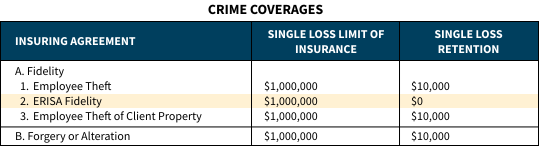
Avoid duplication of coverage so that you do not end up paying double the cost. Many auditors may mistakenly seek an ERISA bond, not realizing this is not the only place the coverage is found. For example, the below table shows the coverage on a Crime policy.

2.   Determine the right coverage amount.

Failure to bond ERISA to the required amount could result in negligence claims of the Fiduciary, underscoring the importance of aligning coverage with asset size. The DOL states that individuals handling plan funds must be bonded for at least 10% of the funds they managed in the previous year. The bond amount cannot fall below $1,000, nor can the DOL mandate bonding for more than $500,000 per plan official, or $1 million for plans holding employer securities.

It is possible for your limit to be more than what is stated above if a person handles funds for more than one plan. Typically, if our clients purchase Crime, the ERISA Fidelity coverage will be at a much higher limit, i.e., $2 million, $5 million, $10 million or more.

3.   Tailor your Crime coverage to fit your needs.

ERISA Fidelity is just one coverage provided by a Crime policy. More generally, it provides for employee theft of company assets, but it also can provide for employee theft of third party assets. Evaluate your Crime limit in relation to the amount of money you have in any one bank account.

Many companies are often misled by the protection afforded by the FDIC, not realizing that banks are held liable to a negligence standard. Coverage for third party assets is not automatically included; it must be underwritten based off employee exposure to third party assets and can often be contractually required.

There are often sublimits provided by a Crime policy, namely for social engineering and invoice manipulation. With the ability to trick employees to misdirect funds, more and more this will become a heightened risk. Partner with your broker to make sure you are adequately protected, either by working to increase the sublimit or by purchasing excess coverage outside of the Crime policy.

Crime can also be provided as part of an Executive Risk package policy providing the Fiduciary Liability mentioned above, but also liability for Directors & Officers and Employment Practices (harassment).

Protect Your Company

By proactively engaging with your insurance broker and leveraging their expertise, you can navigate the complexities of ERISA coverage with confidence, ensuring robust protection for your firm’s assets against potential risks and liabilities. Greyling’s consulting and insurance professionals can advise design professionals, design-builders, contractors, and owners/developers on these risks and risk mitigation strategies.

AUTHOR

Kristen Walker

KRISTEN WALKER, CRIS, LEED

SENIOR VICE PRESIDENT

Kristen is a client executive and broker with Greyling, a division of EPIC. She is experienced in the unique coverage needs of both contractors and design firms. She works with mid-sized to large clients, many with global exposure and complex insurance programs.

Kristen founded the Greyling | EPIC sponsored Women in A/E/C Networking Events that provides a forum for relevant industry topics to be discussed by leading and up-and-coming women in a relaxed environment.

Kristen joined Greyling in 2012. Prior to that, she was a Senior Underwriter at Zurich focusing on both project and practice professional liability policies for owners, contractors, and designers. Kristen holds Construction Risk and Insurance Specialist (CRIS) and Leadership in Energy and Environmental (LEED) Green Associate designations.

9 Common Disconnects Between Private Equity’s Risk Perspective and AEC Firm Leadership

Private equity investment in the AEC industry
REPORT

9 Common Disconnects Between Private Equity’s Risk Perspective and AEC Firm Leadership

Private equity investment in the AEC industry

Receiving capital from a private equity (PE) investor or joining a PE capitalized Architecture, Engineering and Construction (AEC) firm can be a great opportunity for an AEC firm. It can transform the business, create liquidity for the owners, help you scale up fast, expand to new markets, and boost your profitability.

It also ushers in complex challenges since PE firms will often have a specific time frame earmarked for a targeted return on their investment. As a result, the AEC firm needs to learn how to anticipate and navigate the expectations of PE investors to build and maintain a strong working relationship over time.

Over the last three years, more than 400 companies have been acquired annually, a pace unprecedented and twice the rate observed a decade ago.1 While the frequency of PE mergers and acquisitions (M&A) has leveled off in the last 12 months, it’s not going away, with 2024 anticipated to be another year with over 400 acquisitions. If your firm is considering a sale to a PE- backed firm or taking on PE investors, there’s a lot to think about to ensure the path to what’s next is a smooth one.

What You Need to Know About PE Investment in AEC Firms

The number one job of the AEC firm CEO is to increase shareholder value. Most CEOs understand that explicitly and yet some may not intuitively see the connection between “risk” and “reward” and the need to quickly create shareholder value so they can achieve a successful exit and ROI. Other CEOs — by their actions or inactions — might even inadvertently diminish shareholder value.

When CEO and PE investors are not aligned around strategy, disconnects or misunderstandings happen, and the AEC firm can fail to achieve its aggressive growth objectives. Here are some of the most common disconnects between an AEC firm leadership and PE investor goals, and what you can do to bridge the two.

1.   PE firms avoid asymmetrical risk ventures.

PE investors and CEOs may not align when a firm considers taking on a project or investment that spans several years, and the upside is too limited compared to the possible downside.

For example, a PE investor might believe that at-risk contracts such as engineering, procurement and construction contracts are risky, and that the firm cannot recover from a potentially large hit to retained earnings. Because of this, CEOs need to understand the risk-reward trade-off on a five-year investment. The PE firm is trying to generate certain results within a specific time frame, and the CEO needs to understand that constraint.

2.   PE firms prefer repeatable, master service agreement-type contracts.

Large, episodic project revenue leads to risk, “lumpy” revenue projections, and discounted valuations. PE investors want their architecture and engineering firms to show smooth, steady revenue. CEOs might need to adjust the firm’s marketing and sales strategies accordingly to make sure they’re pursuing the right types of projects with recurring clients.

3.   Uninsurable risks without indemnity are outside PE appetite.

AEC CEOs need to take a big picture view of risk management and think about it from the PE investor’s perspective. Think broadly and proactively about how to account for risks, and enact a comprehensive risk management program to protect their investment. For example:

  • What are some unlikely but potentially costly risks affecting your business, industry, or geographical locations where you operate?
  • What are some unanticipated events that would be catastrophic?
  • Is your firm at risk of losing or gaining opportunities from wildfires in the Western U.S., from floods, or from other natural disasters?
  • What resources does your firm need to be competitive and innovative in your market?
  • What if you suffered a data breach or infringement of intellectual property?

4.   No leadership succession among C-suite = lower valuations.

Many AEC firms do not have a detailed leadership succession plan in writing. If a top executive leaves the firm on short notice, with no clear successor ready to step into that role, it can cause confusion within the business and hurt shareholder value. It can also cause the business to incur additional costs, such as those associated with hiring a recruitment firm for an executive search, added hiring costs, and costs of diminished productivity, lost contracts, or missed opportunities while the executive role is unfilled. 

AEC CEOs need to understand the value of succession planning — not view it as an optional/non-essential activity, or as a threat to their position. Natural attrition and proper succession planning helps reduce expenses, minimize disruptions to the business, and creates a more cohesive leadership team that can take the business to its next level of growth.

5.   Internal and external reputational risks are not tolerated.

PE investors have no tolerance for reputational risks; they are trying to help your firm grow, increase its value, and make your firm attractive to a new potential buyer or investor within the next few years. AEC CEOs need to think carefully about any possible partnerships or business relationships that could damage the reputation of the firm, including international risks and joint venture relationships. CEOs should be aware that the firm is under a higher level of scrutiny and a lower tolerance for reputational risks.

This applies to internal leadership teams as well. More than ever, firms cannot play fast and loose with ethics, misconduct, or poor professionalism among the management team.

Coddling dysfunctional leaders and turning a blind eye to bad behavior, even among “star performers,” can hurt shareholder value in the long run. When leadership teams are dysfunctional, it results in lost opportunities and operational inefficiencies, which ultimately impact the firm’s financial performance. PE investors want your company to be a tightly run ship, with a healthy culture of engaged, high-functioning people. The CEO needs to set the example, starting from the top.

Remember: Top talent doesn’t want to work for bad bosses. When your best people see bad behavior or ethical lapses get rewarded, they will either leave for another company or become disengaged.

6.   Don’t be too slow to pull the plug — or take a new risk.

Some CEOs wait too long to cut their losses on a failed strategy or a bad investment, or to engage in a potentially profitable deal.

Whether it’s a business unit in a dying market, a supposedly innovative idea from a rising leader that’s been sucking cash flow for years, or an overpriced acquisition that was an abject integration failure, CEOs need to know when to pull the plug. PE investors will want to stop the bleeding and redirect resources to new opportunities for growth instead of losing money on a bad venture.

On the other hand, for PE firms, profitable growth is the name of the game, and organic growth is only part of the formula — sometimes acquiring another firm is the best way to grow faster. Shore up your M&A pipeline and due diligence process.

7.   The two parties may not agree to appropriate levels of insurance.

Architecture, engineering and construction firms have complex, industry-specific needs for insurance, and often purchase coverages that may not adequately protect their interests. The key mantra is to “protect the house,” and insurance risk transfer across all coverage lines is a cost-effective way to accomplish that. Almost always, a PE firm will procure higher limits of insurance to do so. 

PE investors need to understand the risk factors and insurance-related aspects of running the business, along with the other strategic decisions. Similarly, CEOs need to ensure their PE investors are aligned around expectations for insurance and risk management.

CASE STUDY: Pinpointing the Right Coverage Reduces Budget

After evaluating one engineering firm’s insurance program, it was discovered the firm had insufficient cyber, professional liability and umbrella/excess coverage. To cover these deficits, Greyling recommended group captive insurance to help save on insurance costs and increase dividends, establishing a five-year timeline to achieve these goals.

In the first year, the group captive for workers compensation, auto, and general liability was implemented, which helped the organization save on insurance costs from the onset. It also created incentives through Insurance Premium Allocation, helped integrate acquisitions, and implemented better loss control measures for the firm’s fleet and workers compensation policies. The savings generated in through this alternative approach created the opportunity to increase limits for other policies without increasing the total cost of risk.

By year five, the firm’s shareholders started receiving dividends from the distribution of captive profits.

8.   The leadership thinks risk management is a “cost center.”

Some AEC CEOs still view insurance premiums and risk management training as expenses rather than investments. But risk management is not an area where organizations should curtail costs or relegate to an HR and finance function. Instead, risk management should be viewed as an investment that is central to the power of the firm’s brand.

Effective risk management helps demonstrate your firm’s commitment to quality, contingency planning, and industry expertise. A total cost of risk approach provides a metric for measuring risk and reward and the effect of investments in training on that equation. PE investors are often focused on the risks facing the business. CEOs need to be ready to discuss risk management as a central strategic factor that can help support the business’s growth and success.

AEC CEOs should consult experts in a particular area when necessary to make the correct risk management action. For example, when reviewing high value or “non-traditional” services contracts for risk exposure during due diligence, including complex structures with a higher risk profile, consider bringing in a risk management consultant or lawyer with the expertise necessary to untangle these contracts to appropriately evaluate the risk exposure.

For higher level execution of risk management, firms should consider an Enterprise Risk Management (ERM) study or the implementation of the role of Chief Risk Officer.

CASE STUDY: Due Diligence Helps Engineering Firm Grow

In 2006, one global consulting, engineering and construction management firm was valued at $265 million, but wanted help increasing revenues and reducing their insurance costs and risk.
After an initial assessment of the firm’s policies, Greyling was able to fix coverage gaps and consolidate the program before it came time to renew policies. This first step saved the company $1 million in that first year.

Another early initiative rolled out was a company-wide risk survey. The results were used to pinpoint areas for improvement and training, which the firm started implementing in that same year. The firm also established a chief risk officer position, helping to define the role and approach to enterprise risk management, and established a total cost of risk methodology for board level reporting.

Greyling also supported general counsel efforts to settle civil and infrastructure legacy claims, which helped keep renewal costs down as the claim issues faded. In addition, Greyling educated the organization’s board on its general liability, auto and workers’ compensation claim problems, which helped motivate the firm to develop safety and strategy goals and earmark staff to execute objectives, and recommended the use of specific policies to reduce cost, including the use of a group captive.

As the firm expanded, Greyling assisted with the organization’s M&A activities and started providing risk advice to manage construction exposure.

Ultimately, the engineering firm achieved a loss ratio of less than 30% by 2021 — a significant reduction from its start with the organization when it was over 100% — and increased revenues to $1.4 billion.

9.   CEOs should identify their organization’s “special sauce.”

Consider the following when identifying your organization’s niche:

  • What’s your firm’s special competitive advantage in the market that can command a premium valuation to future buyers?
  • Does your firm offer expertise in infrastructure; energy; renewables; environmental, social and governance issues; or sustainability?
  • Are you active in fast-growing markets or locations?
  • Do you have hard to replicate experience or expertise, or a great reputation among a niche client base?

Conclusion

Think strategically about what makes your firm a premium brand and how you can position the business to emphasize these unique strengths.

Working with PE investors can help take a firm to the next level of growth, but the CEO and leadership team need to be aligned with the unique expectations and perspectives that PE investors bring to the table. Stay focused on creating shareholder value, understand the risks confronting your business, and be agile and eager to capitalize on new opportunities. This way, your firm can boost your valuation, achieve big ROI, and put the company on a stronger trajectory for years to come.

AUTHOR

Gregg Bundschuh

GREGG BUNDSCHUH, JD

CO-FOUNDER & MANAGING PRINCIPAL

Gregg Bundschuh is a co-founder and an equity partner of Greyling Insurance Brokerage. He is nationally recognized for his active role in addressing emerging issues that affect the construction, design, and development communities. He advises clients of the firm on their insurance programs and risk management strategies. He also provides guidance to industry organizations such as the Associated General Contractors of America (AGC), the American Institute of Architects (AIA), the American Council of Engineering Companies (ACEC), and the National Council of Architectural Registration Boards (NCARB). Gregg’s unique perspective on risk and insurance issues reflects his background as a construction lawyer, a general counsel to an international design firm, and an insurance broker and risk consultant.

Gregg’s experience includes design of customized insurance policies for risks associated with building information modeling (BIM) and integrated project delivery (IPD). He has developed insurance and risk management programs for domestic and international firms in a wide range of industries. In addition, he has spoken before dozens of national and international gatherings concerned with design, construction, risk management, and insurance matters. His publications include An Owners’ Guide to Construction Risk Management & Insurance; the insurance chapter of the New York Construction Law Manual; and The Design/Build Deskbook.